Airtightness isn't owned by one trade. Electricians, plumbers, fire contractors, mechanical contractors and façade installers all create penetrations in the envelope.
Every penetration is a potential leak point, and every trade that creates one is responsible for how it's sealed.
Green Star targets raise the stakes, because the performance threshold leaves far less room for uncoordinated gaps.
Coordination matters more than any single trade doing a perfect job in isolation.
Airtight buildings are built by teams, not individuals.
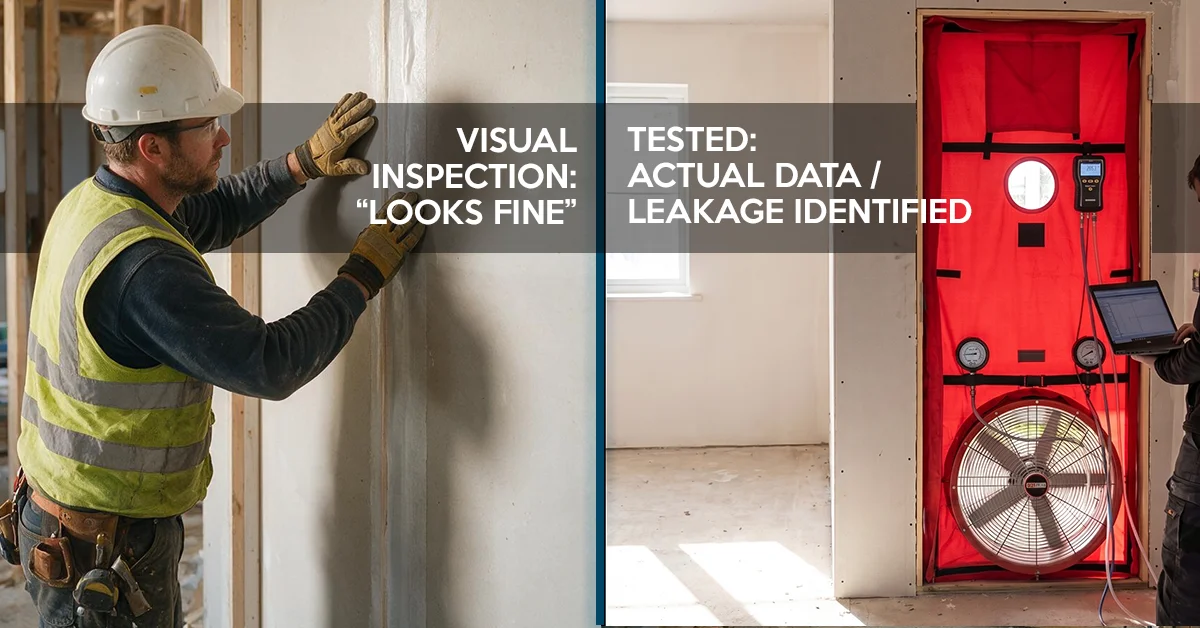
Ask most people on site who’s responsible for airtightness, and they’ll point at the testing contractor. That’s the wrong answer.
By the time the blower door shows up, the envelope’s performance has already been decided by five or six trades who never thought of themselves as being in the airtightness business.
Airtightness isn’t owned by one trade. It’s the sum of every penetration, junction and service run that passes through the building envelope, made by whichever trade happened to be on site that week.
That’s the part that gets missed on most projects. There’s no single trade whose job title includes “seal the envelope.” It falls between everyone, which means it’s easy for it to fall through the cracks entirely unless someone is actively coordinating it.
Every conduit run, switchboard penetration and cable entry through an external wall or ceiling is a potential leak path. Multiply that across a commercial fitout and the number of penetrations adds up fast.
Pipe penetrations for water, waste and gas all pass through the envelope somewhere, often through the same cavity as electrical and mechanical services, which makes sequencing and access harder to manage cleanly.
Fire-rated penetrations and collars have their own compliance requirements on top of airtightness, which means the sealing detail has to satisfy two standards at once, not just one.
Ductwork, louvres and plant penetrations are often the largest single openings in the envelope. A mechanical contractor who isn’t thinking about airtightness can undo the careful work of every other trade on the job.
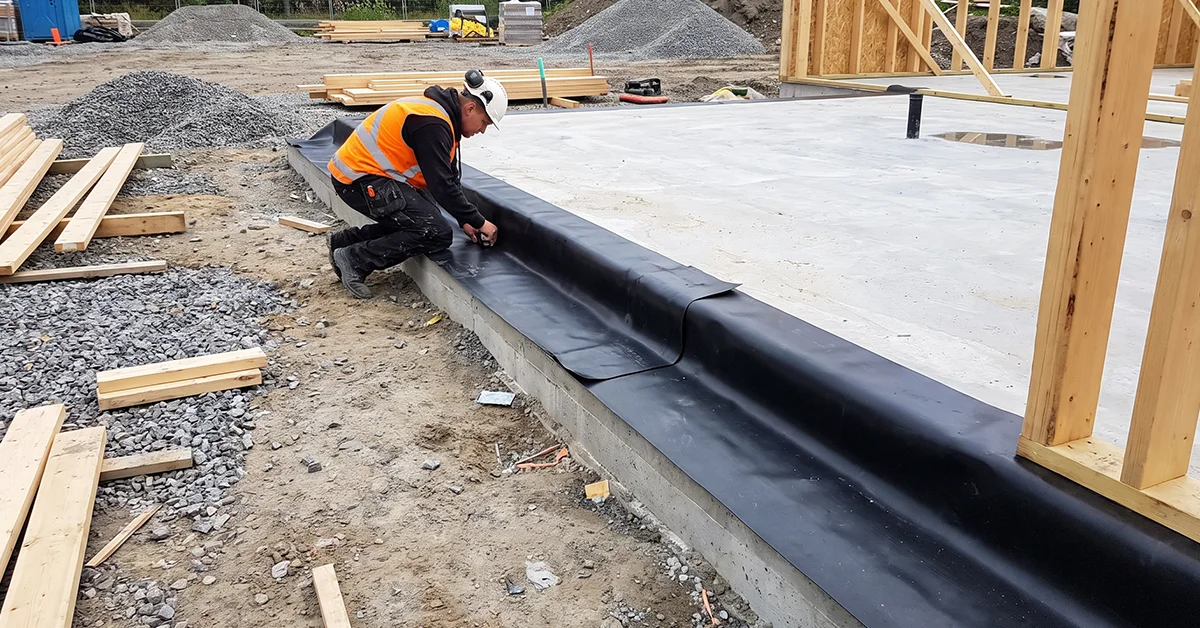
Window-to-wall junctions, cladding interfaces and movement joints sit right at the edge of the air barrier. Get the membrane continuity wrong here and it’s one of the hardest defects to fix once the façade is closed up.
A standard build has some margin for a missed seal here or there. A Green Star target usually doesn’t. The performance threshold that earns the rating points leaves far less room for the kind of small, uncoordinated gaps that would barely register on a conventional project.
That means the coordination problem that exists on every job becomes a compliance risk on a Green Star job. It’s no longer just about comfort or energy bills, it’s about whether the rating is achievable at all.
Every trade matters, but coordination matters even more. A brilliant façade installer working next to an electrician who has never been briefed on the air barrier still ends up with a leaky building. The fix isn’t better individual trades, it’s getting everyone aligned on the same strategy before they start cutting into the envelope.
That’s exactly what trade workshops are for: getting every trade on the same page about where the air barrier is, why it matters, and what a compliant penetration actually looks like, before it becomes a defect that shows up at final testing.
Airtight buildings are built by teams, not individuals. No single trade can deliver a Green Star airtightness result on their own, and no amount of skill from one contractor can compensate for five others who were never briefed on the strategy.
Coordinate the trades early, using our 8-step airtightness process to keep everyone aligned from design through to final verification under AS/NZS ISO 9972, and the test at the end stops being a gamble. It becomes confirmation of work that was already done right.
If your project is heading toward a Green Star target, talk to us about coordinating your trades before the envelope closes up, not after.
Airtightness is a shared responsibility across multiple trades, not a single contractor. While the principal contractor oversees the overall target, electricians, plumbers, fire, mechanical, and façade installers each own the integrity of the penetrations they create in the building envelope.
No. The blower door testing contractor only measures the final result under standards like AS/NZS ISO 9972. By the time final testing occurs, the building envelope’s performance is already locked in by the work done earlier by each subcontractor.
Ductwork, louvres, window-to-wall junctions, and cladding interfaces represent some of the largest openings and perimeter joints in the envelope. Defects or membrane gaps at these locations are exceptionally difficult and costly to fix once the façade is closed up.
As early as possible – ideally during early design and pre-construction phase via trade workshops. Briefing trades on the air barrier strategy before they start cutting into the envelope prevents costly rework and defects later.
Find out which of these 10 details are leaking while they’re still cheap to fix. Book an appointment with Aerotight.
Need airtightness testing for compliance or project verification? Submit the form and our team will reach out to you shortly.