Airtightness Consultant Role in Construction: Why One Partner Should See It Through

Posted by Joel Symmans

Key Takeaways

An airtightness consultant's job starts at schematic design, not on test day.

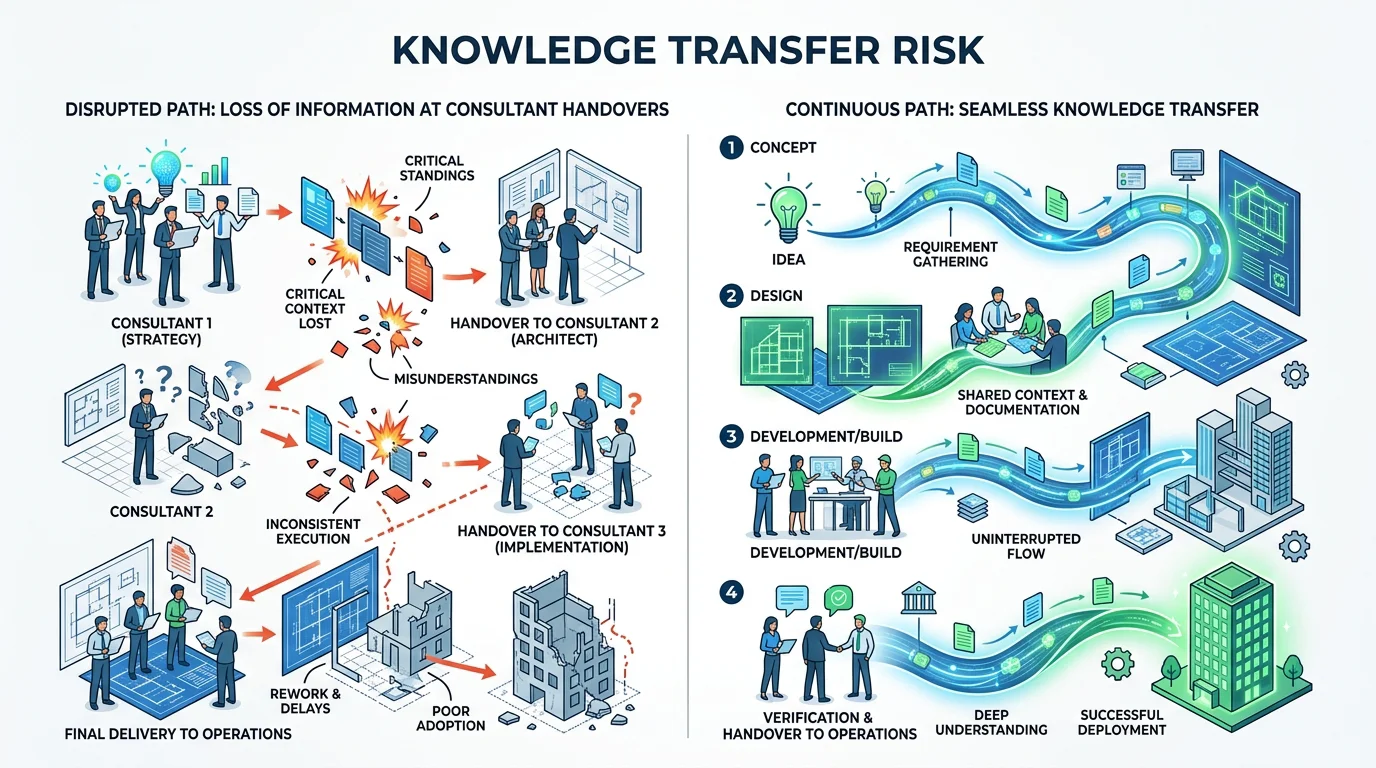
Handing a project between a design consultant and a separate testing contractor creates gaps in knowledge transfer, interpretation and reporting.

The consultant who wrote the airtightness strategy understands why leakage is happening, not just where it is.

Testing confirms whether the building was delivered to the agreed design intent. It does not create airtightness on its own.

A single technical partner across design, construction and verification reduces project risk and gives builders one point of accountability.

Most people picture an airtightness consultant showing up on the last day of the build with a blower door and a laptop. That is the smallest part of the job.

The real work starts months earlier, at schematic design, and it does not stop until the final report is signed off. Understanding the full role matters, because how you structure that role, one partner throughout or several handed off in sequence, has a direct effect on whether the building actually performs as designed.

What an Airtightness Consultant Actually Does

It Starts Before the First Wall Goes Up

A proper airtightness strategy is set at the drawing stage. The consultant reviews plans and specifications, identifies where leakage risk is likely to sit, and defines what Aerotight calls the air barrier: the continuous line of airtightness that has to be maintained across every junction, penetration and interface in the envelope.

This is design work, not measurement work. It sets the assumptions everything downstream will be checked against.

It Doesn't Stop at the Drawings

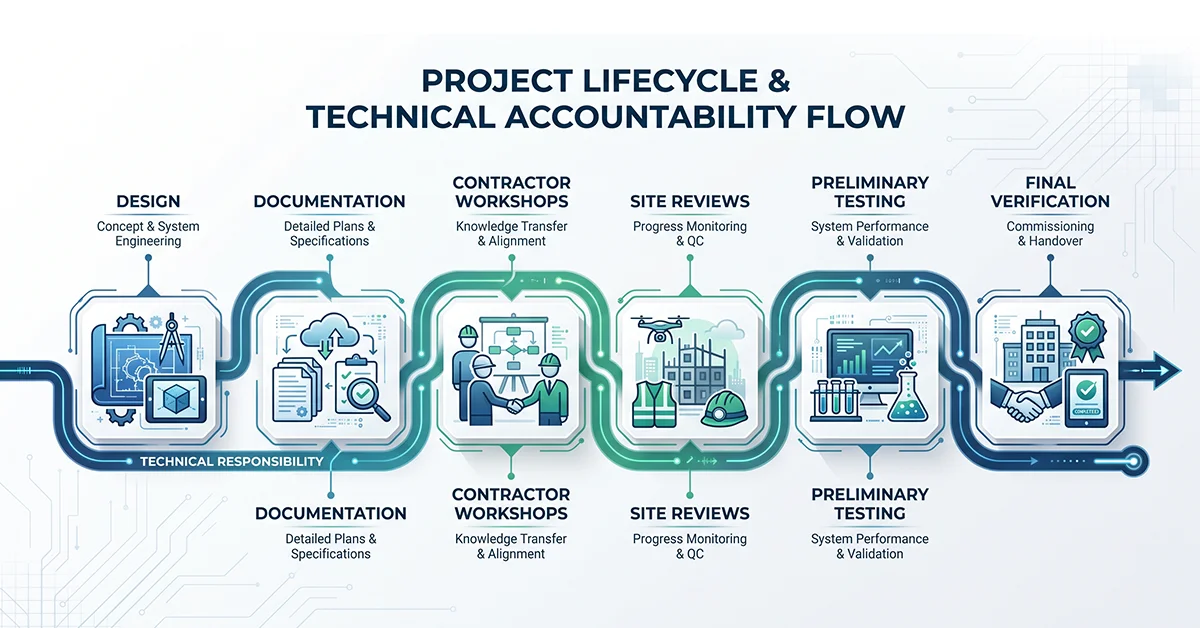
A common misconception is that once the drawings are approved, the airtightness strategy is finished. In reality, that is when the real work begins. From there, the role runs through contractor education, site inspections, progressive reviews, preliminary testing, defect resolution and final verification. The formal test under AS/NZS ISO 9972 is simply the last checkpoint in a much longer quality assurance process, using our 8-step airtightness process as the framework that carries it through.

Why Continuity Matters More Than the Final Test

The Risk of Handing Over Between Consultants

When the team that designs the strategy is different from the team that verifies it, something gets lost in the handover every time. Knowledge transfer is never perfect. Interpretation differences creep in.

Assumptions made at design stage get missed. Reporting formats do not line up. Defects that could have been caught early get identified late, when they are far more expensive to fix.

None of this is anyone’s fault specifically. It is a structural risk that exists any time responsibility changes hands mid-project.

Design Intent Is Knowledge, Not Just Data

Anyone can measure airflow. Far fewer people understand why leakage is occurring.

The consultant who developed the original strategy knows why a membrane terminates where it does, why a particular detail was chosen over an alternative, where movement joints sit in the structure, and which interfaces were always expected to be the hardest to seal.

That context is exactly what turns a leak reading into a fast, accurate diagnosis instead of a guessing game.

The Six Stages Where Your Consultant Should Be Involved

  1. Design – identify risks before anything is built.
  2. Documentation – develop practical, buildable details.
  3. Contractor workshops – make sure trades understand the strategy, not just the drawings.
  4. Site reviews – confirm construction matches design intent while it is still accessible.
  5. Preliminary testing – find issues early, while they are cheap and easy to fix.
  6. Final verification – provide confidence the building performs as designed.

Structured this way, testing stops being a pass-or-fail event at the end of a project and becomes the final confirmation of a process that has been managed from day one.

Testing Confirms Performance, It Doesn't Create It

This is worth saying directly, because it changes how builders should think about the test itself: the test is not there to pass or fail. It is there to verify that the envelope has been delivered in accordance with the agreed design strategy.

If the design was right and the construction followed it, the test result should not be a surprise. It is confirmation, not a gamble.

The Case for One Airtightness Partner From Concept to Verification

Airtight buildings are not achieved through testing. They are achieved through informed design, consistent implementation, and independent verification carried out by a team that actually understands the original design intent.

The greatest value is not in the final test itself. It is in having one technical partner responsible for the airtightness strategy from concept through to verification, reducing uncertainty and helping builders deliver the building as it was actually designed.

This is not an argument against other testers. It is an argument about reducing project risk, and it lines up with how builders already prefer to operate: fewer interfaces, clearer accountability, and a technical partner who stays involved for the life of the project rather than appearing once at the end.

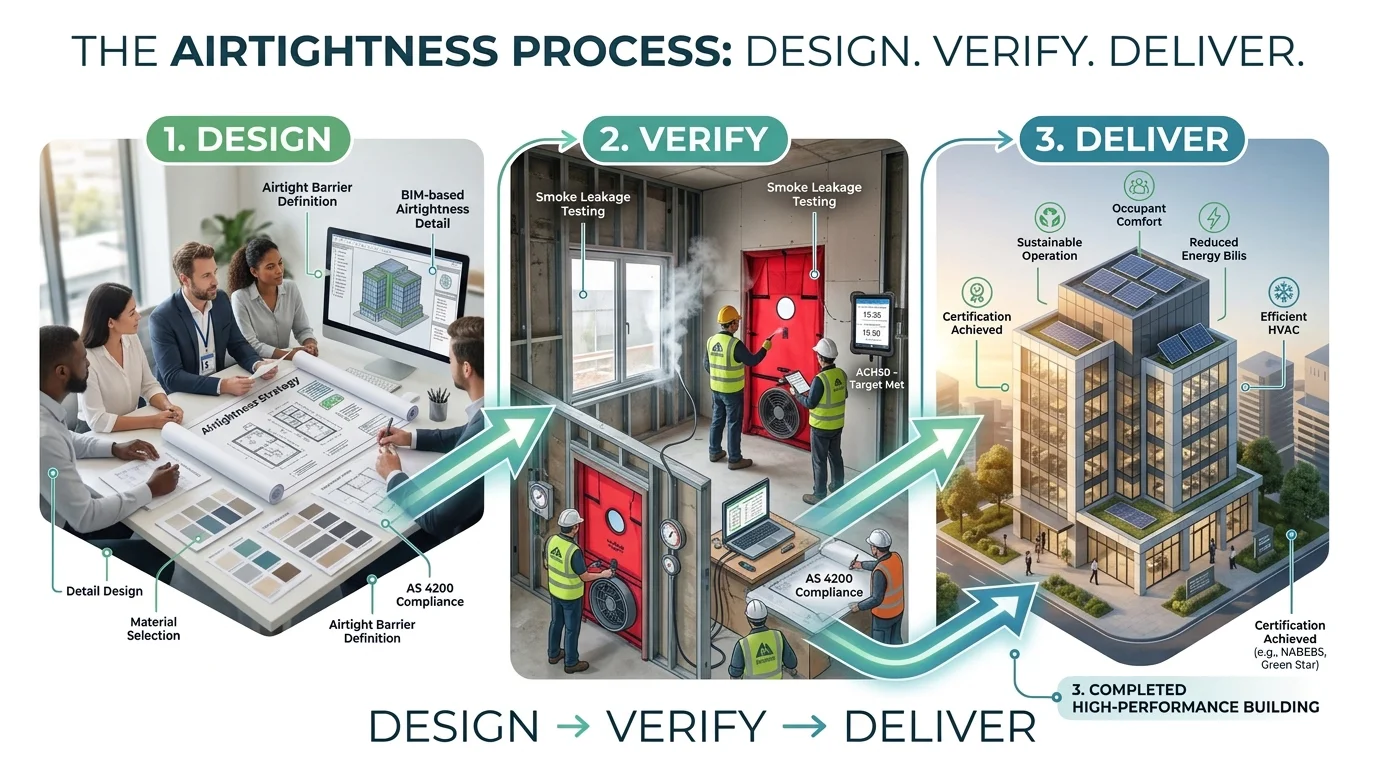
Design. Verify. Deliver. That is the sequence, and it works best when one team carries the knowledge through every stage of it.

If you want to see how this plays out on real projects, or talk to an airtightness consultant about getting involved from schematic design onward.

Design Intent Is Knowledge, Not Just Data

Anyone can measure airflow. Far fewer people understand why leakage is occurring.

The consultant who developed the original strategy knows why a membrane terminates where it does, why a particular detail was chosen over an alternative, where movement joints sit in the structure, and which interfaces were always expected to be the hardest to seal.

That context is exactly what turns a leak reading into a fast, accurate diagnosis instead of a guessing game.

Frequently Asked Questions

Is airtightness testing mandatory for Green Star?

Yes. Under Green Star Buildings, airtightness is now a minimum expectation, not an optional credit. Green Star – Design & As Built has a dedicated air permeability testing criterion, and Green Star Homes lists airtightness under the Positive home category.

What standard is used for Green Star airtightness testing?

Green Star airtightness testing follows AS/NZS ISO 9972, the same blower door test standard Aerotight applies across all commercial and residential projects.

How many apartments need to be tested in a multi-residential Green Star project?

A minimum of 10 dwelling units, or 10% of total units, whichever number is greater. Sample units need to genuinely represent the wider build.

Can you get extra Green Star points for airtightness testing?

Yes. Projects pursuing whole-building airtightness testing under Green Star – Design & As Built can target an additional point through Market Transformation in the Innovation category, though this sits outside the Leadership pathway, so check eligibility with your Green Star Accredited Professional.

When should airtightness be planned in a Green Star project?

At concept and schematic design, not after finishes and services are locked in. Fixing airtightness after the envelope is built is limited, expensive, or both.

What happens if a Green Star building fails its airtightness test?

By the time testing happens, the envelope is largely finished, so corrective options are limited and costly. This is why preliminary testing and site audits during construction matter more than the final test itself.

Airtightness Consultant

Airtightness Consultant Role in Construction: Why One Partner Should See It Through

Home Airtightness Consultant Role in Construction: Why One Partner Should See It Through Posted by Joel Symmans Key Takeaways An airtightness consultant’s job starts at ...
Read More →
Airtightness Consultant

Airtightness Consultant Role in Construction: Why One Partner Should See It Through

Home Airtightness Consultant Role in Construction: Why One Partner Should See It Through Posted by Joel Symmans Key Takeaways An airtightness consultant’s job starts at ...
Read More →
Green Star

Why Airtightness Matters for Your Green Star Credits

Home Why Airtightness Matters for Your Green Star Credits Posted by Joel Symmans Key Takeaways Airtightness is now a minimum expectation under Green Star Buildings, ...
Read More →

Get a preliminary blower door test before your compliance test!

Find out which of these 10 details are leaking while they’re still cheap to fix. Book an appointment with Aerotight.

Need airtightness testing for compliance or project verification? Submit the form and our team will reach out to you shortly.

Name(Required)
This field is for validation purposes and should be left unchanged.