Most slab edge air leakage comes from discontinuous membrane laps, not from a single obvious gap.
Penetrations sealed after the slab is poured are harder and more expensive to fix than penetrations sealed during the pour.
Movement joints need a flexible seal, not a rigid one, or they will crack open under normal building movement.
Site sequencing, not product choice, is the biggest driver of slab edge sealing failures.
The team that designed the airtightness strategy is best placed to diagnose why a slab edge is leaking, because they know why every detail was specified that way.
Builders rarely lose first pass compliance on the big, obvious stuff. They lose it on the slab edge: metres of perimeter detail that gets treated as a formwork problem instead of an airtightness problem. Get it wrong and you are back on site after the concrete has cured, chasing a leak path that would have taken minutes to seal properly the first time.
Why Slab Edge Sealing Fails More Often Than It Should
The slab edge sits at the junction of two trades who rarely talk to each other: the concreter, who is focused on strike time and formwork strip, and whoever installs the air barrier membrane, who is often working days or weeks later. Neither is thinking about airtightness as a system. They are thinking about their scope.
That handover gap is where leakage gets built in. Not through bad materials. Through bad sequencing.
The Most Common Slab Edge Sealing Mistakes
Fault 01
Discontinuous Membrane Laps
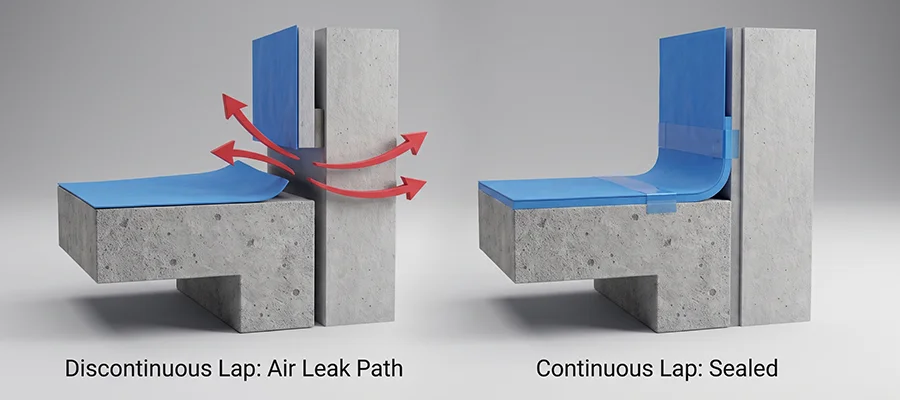
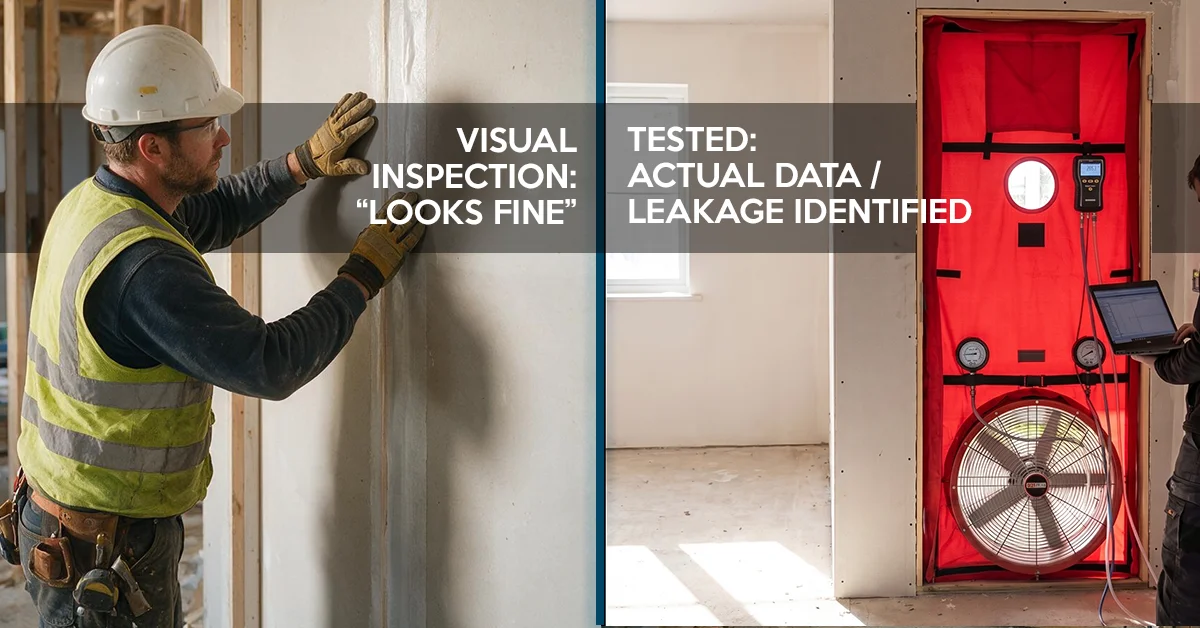
A membrane that looks continuous from a distance often has laps that were never fully pressed, taped in the wrong direction, or interrupted at a corner. Under a blower door test at 50 Pa, air finds every one of those gaps. This is the single biggest contributor to failed slab edge results.
Fault 02
Penetrations Sealed as an Afterthought
Plumbing, electrical, and drainage penetrations through the slab edge are frequently sealed after the membrane is already installed, using whatever sealant is on the truck that day. Sealing the penetration collar as the service goes in, as part of the original detail, is faster, cheaper, and far more reliable.
Fault 03
Movement Joints Left Untreated
Slab edges move. If the joint is sealed with a rigid product instead of a flexible airtight sealant rated for movement, it will crack within the first year and the leak path reopens, even though the test passed on day one.
Fault 04
Poor Sequencing Between Trades
This is the root cause behind the first three. When the airtightness detail is not written into the trade program, whoever finishes last inherits a problem they did not create and cannot easily fix.
Membrane lap comparison diagram, correct vs incorrect
What Proper Slab Edge Sealing Actually Looks Like
CONTINUOUS LINE
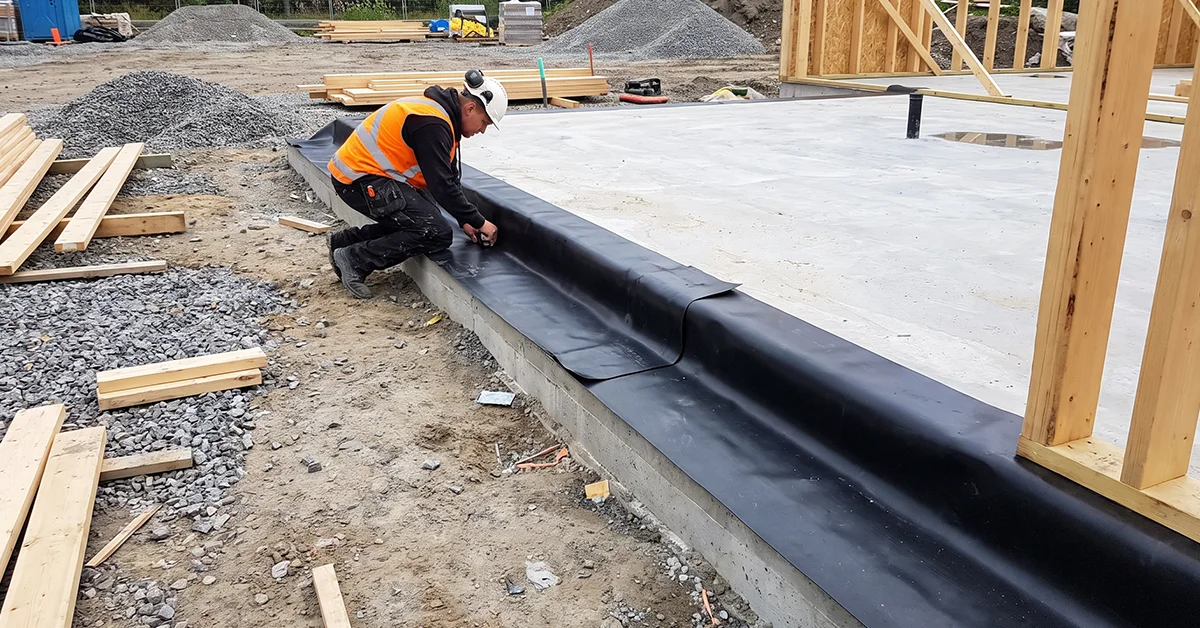
A continuous air barrier line, not isolated patches
This is the root cause behind the first three. When the airtightness detail is not written into the trade program, whoever finishes last inherits a problem they did not create and cannot easily fix.
SELECTION
Correct membrane selection and lap direction
Not every membrane is rated for the exposure and movement a slab edge will see. Selection matters as much as installation, and lap direction should always shed water and air away from the joint, not into it.
SEQUENCING
Sealing services and penetrations as they go in, not after
Every penetration should be sealed at the point of installation, using a product and detail specified for that exact penetration type, so nobody is retrofitting a seal around a pipe that is already cast in place.
Why Design Intent Matters More Than the Test Itself
Anyone can point a blower door at a building and get a number. Far fewer people can look at that number, walk the slab edge, and know exactly why the leakage is happening.
That takes knowledge of why the membrane terminates where it does, why a particular detail was selected over an alternative, and where the interfaces were always going to be the hardest part of the build.
The test does not create airtightness. It verifies whether the original design intent was actually delivered.
The Aerotight Approach: Design. Verify. Deliver.
This is why airtightness design and airtightness verification should never be split across two consultants. Airtight buildings are not achieved through testing. They are achieved through informed design, consistent implementation on site, and independent verification by the team that understands the original design intent.
The greatest value is not in the final test. It is in having one technical partner responsible for the airtightness strategy from concept through to verification, reducing uncertainty and helping builders deliver the building as it was actually designed.
That is why Aerotight builds every project the same way: design the strategy, workshop it with the trades, review it on site, test preliminarily while issues are still accessible, then verify formally against AS/NZS ISO 9972. One team, one line of accountability, from the first drawing to the final report.
Home Everything You Need to Know About Airtightness Testing for Hospitals and Healthcare Buildings Posted by Joel Symmans Key Takeaways Airtightness testing in hospitals is ...
Home Airtightness Compliance: Why Passing Visual Inspection Doesn’t Guarantee You’ll Pass the Test Posted by Joel Symmans Key Takeaways A visual inspection checks whether seals ...
Home How to Seal Slab Edges Properly: The Details Costing Builders First Pass Compliance Posted by Joel Symmans Key Takeaways Most slab edge air leakage ...
If your next pour is coming up and the slab edge detail has not been reviewed against your airtightness strategy, that is the cheapest moment to fix it.
Talk to us before your next pour and we will walk the detail with you.
Need airtightness testing for compliance or project verification? Submit the form and our team will reach out to you shortly.