Everything You Need to Know About AS 2252 in Australia
A Practical Guide for Architects, Engineers, and Laboratory Projects
When you’re designing or managing a laboratory, compliance isn’t just a box to tick. It directly affects safety, performance, and long-term operational risk.
That’s where AS 2252 comes in.
This Australian Standard governs how biological safety cabinets (BSCs) and clean workstations are designed, tested, installed, and maintained. And if you’re involved in healthcare, research, or pharmaceutical environments, it’s something you simply can’t afford to misunderstand.
Let’s walk through what actually matters, without the unnecessary complexity.
What is AS 2252?
AS 2252 is a series of Australian Standards that ensures biological safety cabinets perform as intended in real-world conditions.
The AS 2252 Framework:
AS 2252.1:2025 (Class I): Focuses on personnel and environmental protection.
AS 2252.2:2025 (Class II): The “Gold Standard” for modern labs. Provides personnel, environment, and product (sample) protection.
AS 2252.4: Technical guidelines for installation and use (critical for Architects).
AS 2252.5: Requirements for Cytotoxic Drug Safety Cabinets (specialised for oncology/pharmacy).
Their role is straightforward but essential:
Protect people, the environment, and sensitive materials from contamination or exposure
Why AS 2252 Matters More Than You Think
On paper, a biological safety cabinet might look compliant. But in practice, performance depends on:
Airflow stability
Installation conditions
Room environment
Ongoing maintenance
This is why AS 2252 doesn’t just focus on design. It ensures the cabinet actually works once it’s installed and in use.
For technical teams, this is where projects either pass smoothly or run into costly delays.
How Biological Safety Cabinets Actually Work
To meet AS 2252 requirements, cabinets rely on a combination of:
HEPA Filtration
Removes 99.97% of airborne particles, including harmful microorganisms.
Controlled Airflow
Prevents contaminated air from escaping or entering the work zone.
Pressure Management
Maintains safe containment through negative and positive pressure zones.
These systems work together to deliver three critical outcomes:
Personnel protection
Environmental protection
Product protection
If one fails, the entire system is compromised.
The Compliance Pathways: Testing vs. Verification
To prove that a building meets the mandated 5 m3/(h·m2) threshold, designers must choose one of two compliance routes:
1. The Verification Method (JV4) – The Blower Door Test
This is the most robust way to ensure compliance and is increasingly preferred for complex designs.
The Standard: Testing must be conducted strictly in accordance with AS/NZS ISO 9972.
The Process: Large, calibrated fans are mounted in a main doorway to pressurize and depressurize the entire building (or representative zones).
The Benefit: A successful JV4 test provides definitive performance data. This often allows designers to use holistic energy modeling to offset other design elements (like standard-performance glazing) with the building’s superior airtightness.
2. The DTS Pathway – Evidence of Suitability
If a formal blower door test is not conducted, the builder must provide comprehensive “Evidence of suitability” to the building certifier.
This requires a rigorous inspection and documentation regime throughout construction, proving that every prescriptive requirement of Part J5D7 has been met and that all fabric junctions are continuously sealed.
This requires meticulous documentation of prescriptive sealing measures, including:
Windows and Doors: Durable seals (brush or bulb) to the head, jambs, and sills.
Fabric Junctions: Continuous sealing of connections between roofs, walls, and floors using membranes or tapes.
Openings: Self-closing dampers on exhaust fans and close-fitting flaps on chimneys.
Beyond the Envelope: Mechanical Systems and Windows
Airtightness doesn’t stop at the walls. NCC 2022 Section J also emphasizes two often-overlooked areas:
Part J6 Mechanical Air Systems: HVAC ductwork must be sealed to prevent leakage, complying with AS 4254. Poor duct sealing can undermine an otherwise airtight building.
Internal Window Performance: Even with a compliant envelope, windows remain thermal weak points. High-performance window furnishings—such as honeycomb (cellular) blinds or thermal-lined curtains—act as a secondary layer to minimize solar gain and support the building’s overall thermal strategy.
Typical Airtightness Benchmarks
Across Australia, common targets include:
Standard commercial: 10–15 ACH@50Pa
High-performance buildings: 5–10 ACH@50Pa
Net Zero / Passive House: <5 ACH@50Pa
The tighter the building, the lower the energy demand and the easier compliance becomes.
Common Pitfalls and How to Avoid Them
Waiting until the end of a project to address airtightness is a high-risk strategy. If a building fails a JV4 test after internal linings are installed, rectifying leaks is cost-prohibitive.
Strategies for Success:
The “Red Line” Rule: Architects should draw a continuous air barrier on all sections. This line must be constructible and durable.
Early Coordination: Ensure electrical, plumbing, and service penetrations are sealed as they are installed, rather than patched at the end.
Accurate HVAC Sizing: An airtight building allows engineers to size mechanical plants more accurately, preventing the need for oversized, inefficient equipment.
Work With Specialists Who Understand Performance
At Aerotight, we work alongside architects, builders, and developers to deliver customised window furnishing solutions that actively support energy efficiency outcomes.
We don’t just supply blinds or curtains—we help improve:
Thermal performance
Occupant comfort
Overall building efficiency
Particularly for projects targeting:
NCC 2022 compliance
NABERS ratings High-performance residential and commercial builds
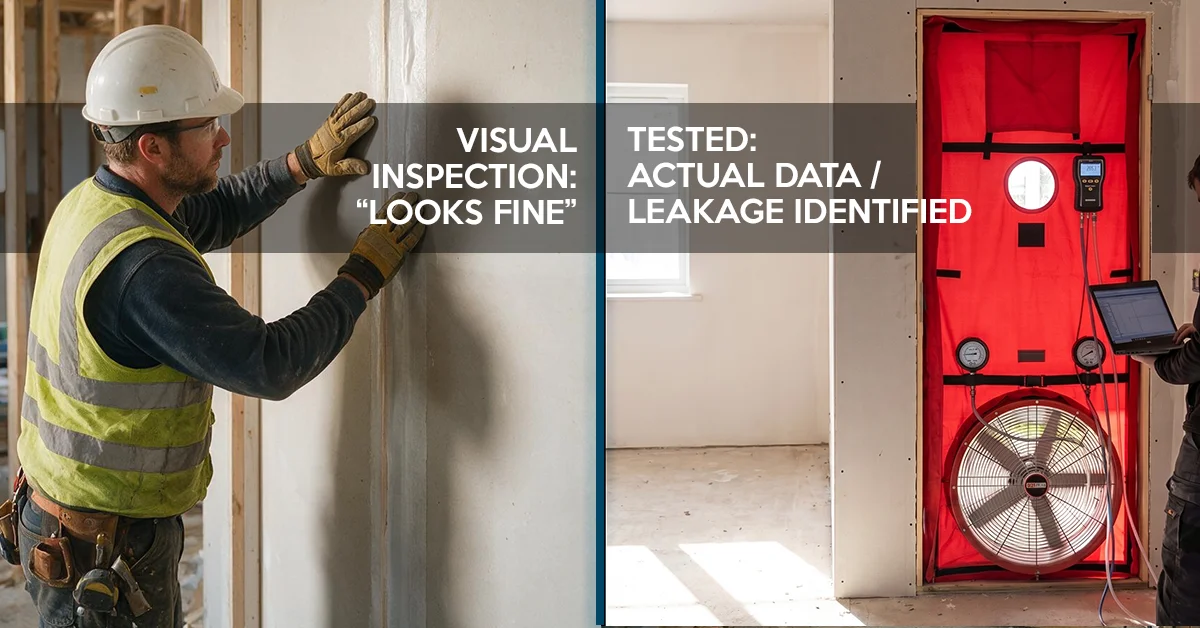
Home Airtightness Compliance: Why Passing Visual Inspection Doesn’t Guarantee You’ll Pass the Test Posted by Joel Symmans Key Takeaways A visual inspection checks whether seals ...
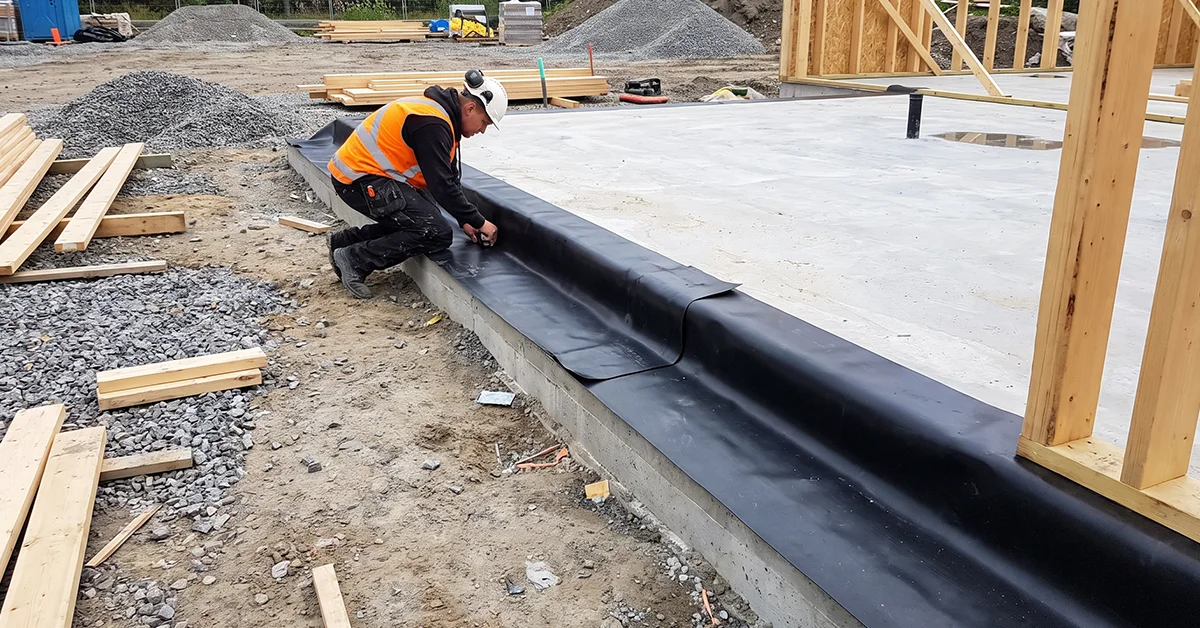
Home How to Seal Slab Edges Properly: The Details Costing Builders First Pass Compliance Posted by Joel Symmans Key Takeaways Most slab edge air leakage ...
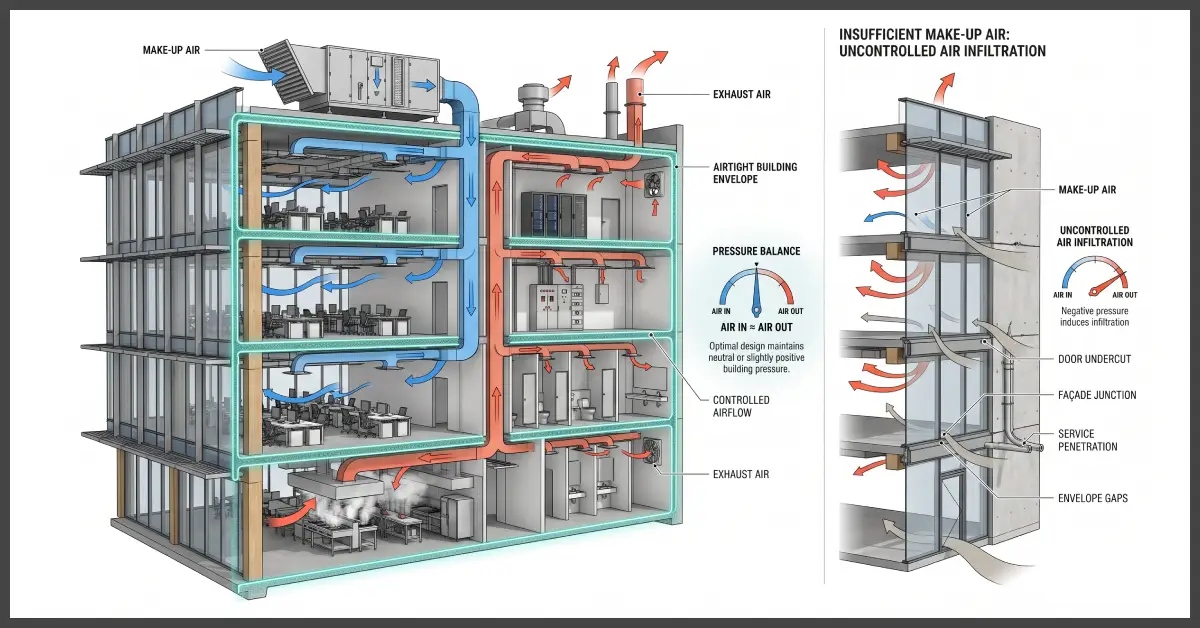
Home What Make-Up Air Design Is Actually Trying to Achieve Posted by Joel Symmans Key Takeaways The Core Purpose of Make-Up Air: Make-up air replaces ...
As energy costs rise and government projects demand measurable outcomes, airtightness has become a core performance metric.
Whether you are targeting NABERS ratings, Green Star certification, or standard NCC compliance, getting the details right at the design stage is non-negotiable.
Need airtightness testing for compliance or project verification? Submit the form and our team will reach out to you shortly.