
In healthcare environments, airtightness isn’t optional – it’s mission‑critical. Precise control of air leakage, pressure differentials, and contamination pathways directly influences infection control, HVAC energy performance, and regulatory compliance across Australian medical facilities. Aerotight delivers specialist airtightness testing, diagnostics, and compliance reporting tailored specifically for hospitals, clinics, operating theatres, isolation rooms, and critical clean zones.
SCROLL

Healthcare facilities operate with complex ventilation regimes and strict safety expectations:
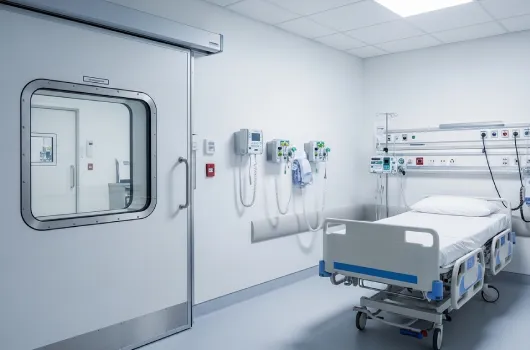
Airtightness in hospitals ensures pressure differentials - such as negative pressure in isolation rooms (to contain airborne pathogens) and positive pressure in operating theatres (to protect sterile fields) — behave predictably. Uncontrolled leakage undermines these critical control strategies and puts patients and staff at risk.
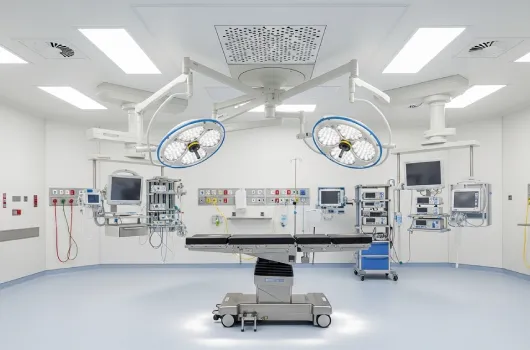
Uncontrolled airflow increases the load on mechanical ventilation systems. Meeting airtightness performance targets helps stabilise temperatures and pressures, reduces HVAC energy consumption, and supports long‑term operational sustainability.
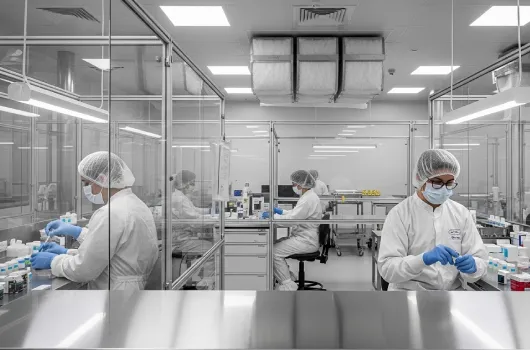
While ventilation standards (e.g., mechanical ventilation and indoor air quality measures such as AS 1668.2) prescribe airflow and filtration requirements, airtightness is the foundation that allows these systems to perform with precision and repeatability.
We validate pressure regimes for:
These are tested to meet or exceed AS 1668.2 ventilation specifications and pressure stability requirements.
Testing for critical clean environments – including cytotoxic pharmacies and controlled environments – is aligned with ISO 14644 series and AS 2252 standards. These measures ensure structural integrity against leakage and contamination ingress.
Using tools such as ultrasonic sensors, smoke visualisation, and blower door systems, Aerotight doesn’t just report a number – we identify leakage sources so corrective action is effective and traceable.
Compliance with NCC Section J is mandatory for many commercial and healthcare builds, requiring measurable and demonstrable airtightness performance. Aerotight delivers documented test outcomes essential for building approvals and handover compliance verification.
Compliance with NCC Section J is mandatory for many commercial and healthcare builds, requiring measurable and demonstrable airtightness performance. Aerotight delivers documented test outcomes essential for building approvals and handover compliance verification.
By Aerotighting the envelope strategy from concept, we help architects and engineers design high‑integrity barrier systems and anticipate critical leakage pathways before construction begins.
Pre‑fitout testing after the air barrier is established enables early detection of deviations from design intent – saving time and cost compared to issue discovery at project completion.
Real-world airtightness results across Australia, delivered by Aerotight. Explore how precision testing, compliance expertise, and proven outcomes help projects meet strict performance standards with confidence.
Lorem ipsum dolor sit amet, consectetur adipiscing elit. Ut elit tellus
Lorem ipsum dolor sit amet, consectetur adipiscing elit. Ut elit tellus
Lorem ipsum dolor sit amet, consectetur adipiscing elit. Ut elit tellus
Lorem ipsum dolor sit amet, consectetur adipiscing elit. Ut elit tellus
Hear directly from builders, architects, and project teams across Australia who trust Aerotight for accurate testing, smooth compliance, and dependable results on every project.
We chose Aerotight over several others due to their depth of expertise and structured approach. Joel and Andrew were excellent from the outset, providing clear direction through design and ensuring everything was set up properly before testing. Pricing was competitive, but their capability is what ultimately set them apart.
Andrew and the team were outstanding. Confident, knowledgeable and easy to work with.
We use advanced diagnostic tools including non-toxic smoke testing and ultrasonic leak detection. These methods allow us to visualize exactly where air is escaping - whether through service penetrations, door seals, or structural joints - without compromising the sterile environment. This precision allows for immediate, targeted rectification.
Absolutely. Leaky building envelopes force HVAC systems to work harder to maintain temperature and pressure, leading to massive energy waste. By meeting NCC 2022 Section J targets with Aerotight’s testing, healthcare facilities can significantly lower operational costs and improve their NABERS or Green Star ratings.
For the best results, Aerotight recommends a two-stage approach: an initial "pre-fitout" test once the air barrier is established, and a final "as-built" test. This ensures that any leaks in the building fabric are identified and fixed before expensive clinical finishes or medical equipment are installed.
Yes. Aerotight provides airtightness testing services to all of Australia, including metropolitan hubs like Sydney and Melbourne, as well as regional and remote healthcare facilities. We work with Tier-1 contractors and regional health boards to ensure every facility, regardless of location, meets national safety standards.
Clients receive a comprehensive ATTMA-certified report. This includes air permeability results, pressure differential verification, and detailed diagnostic findings (with imagery). This report serves as essential evidence for NCC compliance, Health Infrastructure audits, and final building commissioning.
Yes. Under NCC 2022 Section J, many new commercial healthcare developments in Australia must demonstrate compliance with air permeability standards (typically 5 m3/h.m2 @ 50 Paa). Beyond the code, state health guidelines (like NSW Health GL2015_004 or VHBA) mandate specific pressure differentials for clinical safety. Aerotight provides ATTMA-certified testing to ensure your facility meets both building code and health audit requirements nationwide.
Airtightness is the foundation of infection control. If a building envelope leaks, HVAC systems cannot maintain the required pressure differentials needed to contain airborne pathogens. Aerotight’s testing verifies that Class N (Negative Pressure) and Class P (Positive Pressure) rooms effectively isolate contaminants, protecting both patients and healthcare staff from cross-contamination.
According to AS 1668.2, Class N isolation rooms generally require a minimum negative pressure of -10Pa to -15Pa relative to adjacent areas to contain infections. Class P operating theatres require positive pressure to maintain a sterile field. Aerotight uses high-precision blower door equipment to verify these specific differentials and ensure compliance with Australian standards.
Healthcare facilities must align with several key standards: AS 1668.2 (Mechanical ventilation), NCC 2022 Section J (Energy efficiency/Permeability), AS 2252 (Controlled environments), and ISO 14644 (Cleanrooms). Aerotight’s technicians are experts in these frameworks, providing the certified documentation required for facility handovers and health department audits.
Yes. We provide specialist integrity testing for Cytotoxic pharmacies, Sterile Stores, and CSSD (Central Sterile Supply Departments). These spaces must meet AS 2252 and ISO 14644 standards to prevent the ingress of dust or hazardous substances. Our testing ensures these critical "high-clean" zones remain uncontaminated.
Need airtightness testing for compliance or project verification? Submit the form and our team will reach out to you shortly.